About

Our Story

Founded in 2009, we noticed a gap between how brands talk to their customers (social media) and where they send their customers (static websites). We realized that if we could bridge that gap using modern APIs, we could save business owners hundreds of hours a year. We aren't just designers; we're workflow architects. We want to give you back your time so you can focus on creating content, not managing code.


The Beginning

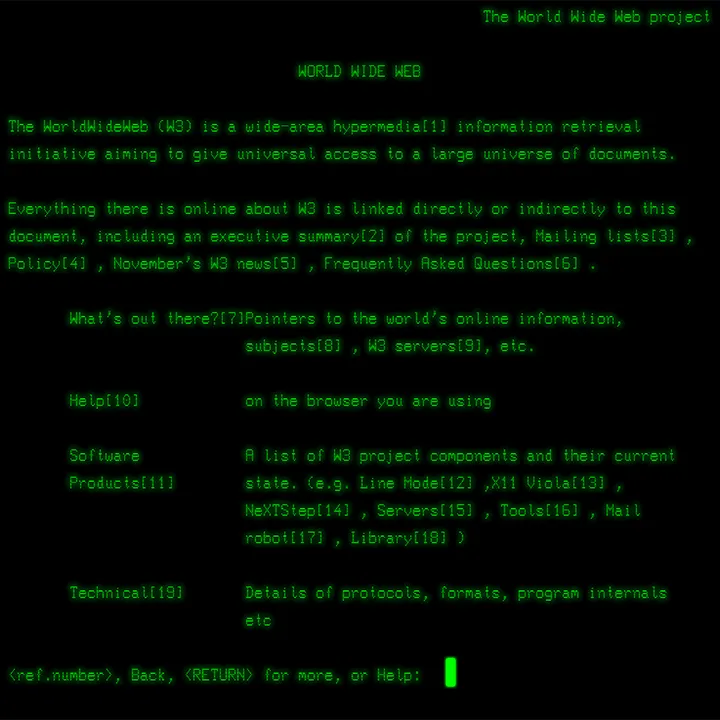
To explain the full story, we have to go back to the very beginning of what we know as the “modern” internet. The first internet website, launched by Tim Berners-Lee at CERN in August 1991, was a simple, text-based page at https://info.cern.ch/ that looked like this and explained the World Wide Web project, how to create web pages, and how to use hypertext, serving as a foundational resource for the early web. Explained as the WorldWideWeb (W3), a wide-area hypermedia information retrieval initiative aiming to give universal access to a large universe of documents.

Early History of Social Media

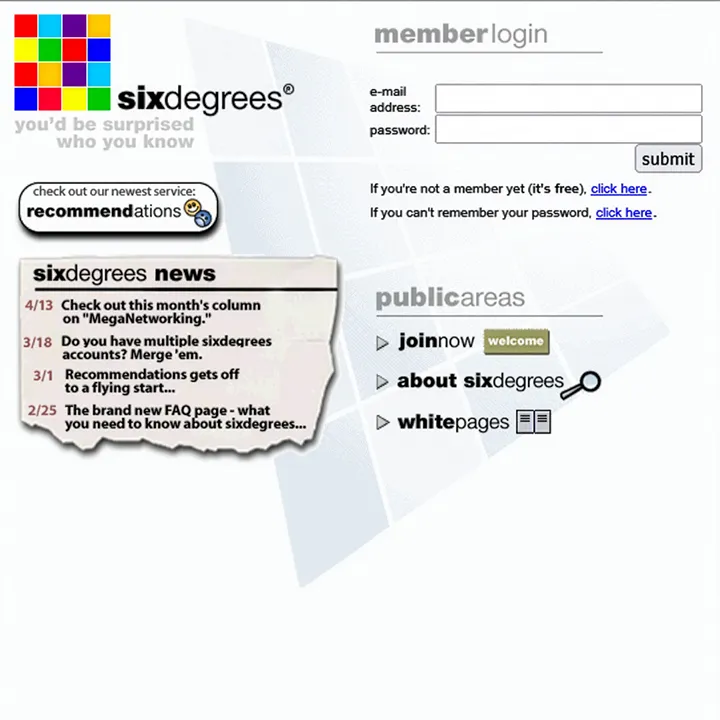
The first recognizable social media site resembling today's platforms was SixDegrees.com, launched in 1997, which allowed users to create profiles, list friends, and connect, embodying core social networking features. While earlier services like Community Memory (1973), Computer Bulletin Board System (1978), The WELL (1985) and IRC (1988) offered online communities and chat, Six Degrees combined profiles and friend lists, setting the stage for modern social media.

Then there was...

AOL was at one point the most recognized brand on the Web in the United States. AOL once provided a dial-up internet service to millions of Americans and pioneered instant messaging and chat rooms with AOL Instant Messenger (AIM). By 2000, AOL was providing internet service to over 20 million consumers, dominating the market of internet service providers (ISPs).


The GeoCities Era

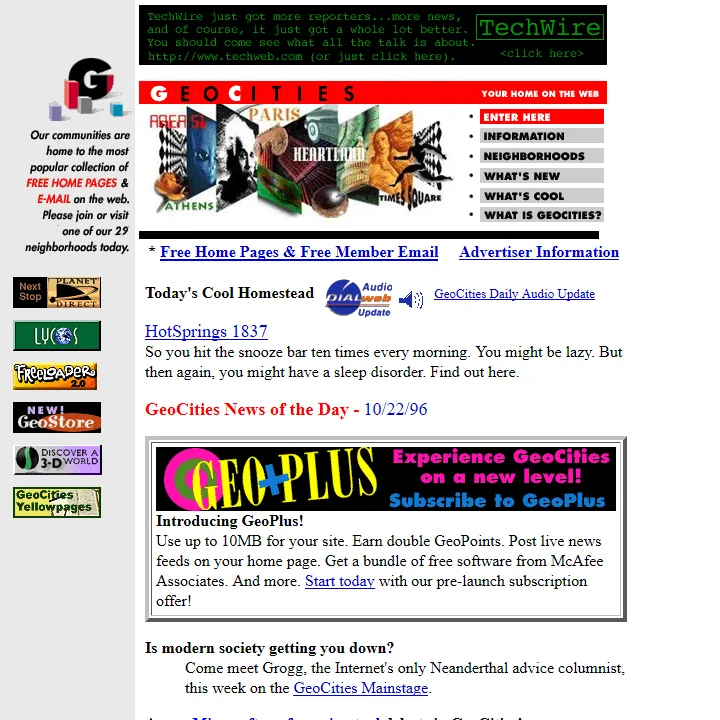
GeoCities (1994-2009) was a pioneering free web hosting service that let users build personal websites in themed “neighborhoods” (like Hollywood for entertainment, Silicon Valley for tech), fostering early online communities with distinctive aesthetics. Launched by David Bohnett and John Rezner as Beverly Hills Internet, it grew massively, was acquired by Yahoo! in 1999, and eventually shut down in 2009, though its archived content remains a nostalgic look at the early web. In these days, you had to code a website using a simple copy/paste “textarea”. As I started coding websites within WebTV (not even a PC), it had to be in raw code, as I still mostly do today.

Today / Tomorrow

We build modern websites that don't rely on outdated content management systems. Instead, we use the platforms you already update every day - social media - to power your website content in real time. Our approach combines custom web development with live social feeds, dynamic APIs, and performance-focused design. Posts, images, videos, and updates from platforms like Instagram, Facebook, and others become your website's content automatically. No logins, no dashboards, no clunky editors - just publish once and your site stays fresh. Every site we build is fast, responsive, and designed for how the modern internet actually works: mobile-first, visually driven, and constantly evolving. Whether it's a landing page, a full business site, or a content-heavy platform, we focus on clean code, strong visual hierarchy, and seamless integration between your brand and your audience. If you can post it on social media, we can make it your website.



FAQ

How long does it take to build a website?
Most websites take 2–6 weeks, depending on the size and complexity of the project. Simple sites can be completed faster, while custom or feature-heavy builds may take longer.
How much does a website cost?
Website pricing varies based on design complexity, number of pages, and functionality. We offer custom pricing so you only pay for what you actually need—no bloated packages.
Will my website work on mobile devices?
Yes. Every website we build is fully responsive, meaning it looks and works great on phones, tablets, and desktops.
Can I update my website myself?
Absolutely. We build sites with easy-to-use content management systems, so you can edit text, images, and pages without any technical experience.
Do you redesign existing websites?
Yes. We can redesign, modernize, or rebuild your current site to improve performance, appearance, and conversions while keeping what already works.
Do you provide hosting and maintenance?
Yes. We offer managed hosting, updates, security, backups, and ongoing support so your site stays fast, secure, and online.
Will my website be optimized for search engines (SEO)?
All sites are built with SEO best practices in mind, including clean code, fast load times, and proper structure. Advanced SEO services are also available.
Do you offer custom designs or templates?
We specialize in custom web design tailored to your brand. We don't rely on generic templates unless a project specifically calls for it.
Can you integrate social media or third-party tools?
Yes. We can integrate social media feeds, forms, booking systems, analytics, e-commerce tools, and more.
What happens after the website launches?
We provide post-launch support, training if needed, and optional ongoing services like updates, marketing, and performance optimization.
How do we get started?
Simply contact us for a free consultation. We'll discuss your goals, recommend the best solution, and provide a clear plan and timeline.
What does “Social Media as a CMS” mean?
It means your website pulls content directly from your social media accounts—like Instagram, Facebook, or TikTok—so when you post on social, your website updates automatically.
Why would I use social media instead of a traditional CMS?
Because it's faster, simpler, and requires no technical skills. If you already know how to post on social media, you already know how to update your website.
Which social platforms can be used as a CMS?
We commonly integrate Instagram, Facebook, TikTok, X (Twitter), YouTube, and select others depending on your needs and content style.
Will my website still look professional?
Absolutely. Your site is fully custom-designed. Social content is styled, filtered, and displayed in a clean, branded layout—never raw embeds.
Can I choose what content appears on my website?
Yes. We can filter by hashtags, post type, platform, or even manually approve content before it appears on your site.
Is this good for SEO?
Yes. We structure the site so search engines can properly read and index your content, while still benefiting from fresh, frequently updated posts.
What happens if a social platform goes down or changes?
We build safeguards and fallback content so your site stays functional. If a platform changes its API, we handle the updates.
Do I still need hosting?
Yes... But we offer hosting as well. Wheather you use ours or another host, you're just using social media as the content source instead of a traditional admin panel.
Can this replace WordPress or other CMS platforms?
For many businesses, yes. If your site is content-driven and updated frequently, social media can completely replace a traditional CMS.
Is this solution secure?
Yes. Your website never exposes your social account credentials publicly, and we follow best practices for API access and security.
Who is this best for?
Brands that post often, creators, musicians, restaurants, gyms, agencies, and businesses that want a website that stays fresh without extra work.
Can you combine social CMS with custom pages?
Yes. You can have fully custom pages (services, landing pages, sales pages) alongside auto-updating social content.